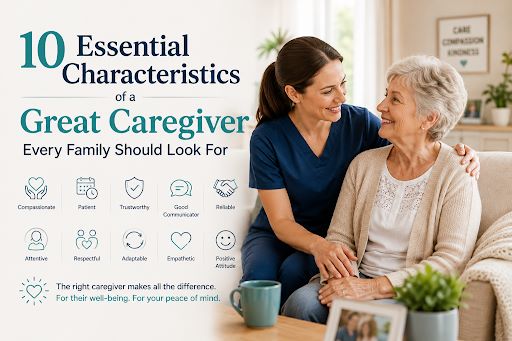
The most important characteristics of a good caregiver are empathy, patience, trustworthiness, clear communication, dependability, adaptability, respect for privacy, emotional resilience, physical stamina, and relevant training. Together, these qualities ensure safe, dignified, and compassionate senior care at home.
Key Takeaways
- Personality fit matters as much as credentials. A caregiver who connects emotionally delivers better daily care than one who just checks resume boxes.
- Watch behavior, not just answers. A trial visit reveals more than any intervie response.
- The right caregiver protects independence. Look for someone who helps your loved one do things for themselves, not someone who does everything for them.
Why Choosing the Right Caregiver Matters
Inviting someone into your loved one’s home is one of the most personal decisions a family makes. That person handles private routines and sets the emotional tone of each day. A strong match builds trust. A poor one leads to resistance, isolation, and an arrangement that falls apart.
Top 10 Characteristics of a Good Caregiver
1. Deep Empathy and Genuine Compassion
Empathy means noticing when your loved one feels frustrated, scared, or lonely and responding with warmth instead of routine. That connection is what turns companion care into real human connection rather than supervised hours.
2. Exceptional Patience Under Pressure
Seniors living with memory loss or limited mobility need extra time for ordinary tasks. Patience shows up in repetitive moments: answering the same question five times without irritation, or waiting while your loved one buttons a shirt.
3. Trustworthiness and Strong Ethics
Your caregiver will have access to the home, personal belongings, and medical records. A trustworthy caregiver keeps promises, follows medication reminder routines exactly, and reports concerns honestly. Verify references and background checks before anyone starts.
4. Clear and Honest Communication
A great caregiver shares updates about appetite, mood, sleep, and new symptoms without being asked. They also read body language and catch what your loved one is not saying.
5. Dependability and Punctuality
Late arrivals disrupt medication schedules, meal preparation, and your loved one’s sense of stability. A dependable caregiver arrives on time, follows the care plan, and flags schedule changes early.
6. Adaptability and Quick Problem Solving
Appointments move, lunch gets refused, the pharmacy sends the wrong prescription. A strong caregiver adjusts calmly, reworks senior transportation when plans shift, and makes sound decisions instead of freezing.
7. Respect for Dignity and Personal Privacy
Personal care assistance with bathing, dressing, and toileting means entering deeply private space. The right caregiver asks before acting, explains each step, and preserves modesty and control.
8. Emotional Resilience and a Calm Demeanor
Dementia episodes, medical emergencies, and decline are part of this work. A resilient caregiver stays grounded without absorbing the stress or reflecting it back, keeping the home steady.
9. Physical Stamina and Attentiveness
Transfers, walking support, and hours on their feet demand real stamina. Attentiveness matters just as much: spotting a new bruise, a smaller appetite, or a trip hazard during light housekeeping often catches problems while they are still manageable.
10. Relevant Experience and Training
Training supplies safe lifting technique, first aid, and hygiene standards. Look for home health aide certification or dementia and fall prevention programs. A licensed home care agency screens for character first, then confirms skill.
Caregiver Traits at a Glance
| Characteristic | What to Look For Day to Day | Why It Matters to Your Loved One |
| Deep Empathy | Responds to emotions, not just physical needs | Feels understood instead of managed |
| Patience | Allows extra time without rushing or sighing | Confidence and self-esteem stay intact |
| Trustworthiness | Handles belongings and medications honestly | The whole household feels safe |
| Communication | Shares updates early and listens closely | Family and doctors stay aligned |
| Dependability | Arrives on time and follows the care plan | Daily routines stay predictable |
| Adaptability | Stays calm when the day changes course | Small disruptions never escalate |
| Respect for Privacy | Asks permission and protects modesty | Dignity and independence are preserved |
| Emotional Resilience | Steady during outbursts and emergencies | The home stays calm and reassuring |
| Physical Stamina | Assists mobility safely for a full shift | Lower fall risk, early warning signs caught |
| Relevant Training | Uses proper lifting, hygiene, and safety technique | Care stays safe and professional |
How to Spot These Traits During an Interview
- Ask scenario-based questions. Instead of “Are you patient?” ask, “Tell me about a time a client became upset during a routine task.” Real stories reveal real character.
- Watch them meet your loved one. Note eye contact, tone, gentleness, and whether they address your family member directly or only you.
- Test ethics and judgment. Ask what they would do if cash went missing or medication was refused.
- Check references specifically. Ask about punctuality, emergencies, and why the last job ended.
- Request a paid trial shift. One or two supervised visits reveal more than any phone call.
Finding the Right Caregiver for Your Family
The goal is not to be a perfect caregiver. It is the right fit for your loved one’s personality, needs, and daily routine. Trust your instincts, and watch how your family member responds early on.
If screening candidates alone feels overwhelming, a licensed agency does that work for you. Every Pathways Home Care caregiver completes background checks, fingerprinting through California’s Home Care Aide Registry, identity verification, and reference checks before a first visit. Contact us for a free in-home consultation and meet a caregiver matched to your loved one.